Viral YouTube Videos: 10 Strategies to Go Viral in 2026


Introduction
Every creator dreams of publishing a video that suddenly takes off and reaches thousands—or even millions—of viewers. A single viral video can bring new subscribers, increase brand awareness, and create opportunities that might otherwise take years to achieve.
However, many people assume that viral YouTube videos happen purely by chance. In reality, most viral content succeeds because it captures attention, delivers value, and encourages viewers to engage and share it with others.
While there is no guaranteed formula for creating viral YouTube videos, understanding the factors behind successful content can significantly improve your chances. The good news is that virality is not limited to celebrities or large channels. With the right strategy, even smaller creators can produce videos that attract massive attention.
In this guide, you’ll learn what viral YouTube videos are, why some videos spread rapidly while others struggle to gain traction, and the key principles that increase the likelihood of creating content people genuinely want to watch and share.
Table of Contents
What Are Viral YouTube Videos?
What Does “Viral” Mean on YouTube?
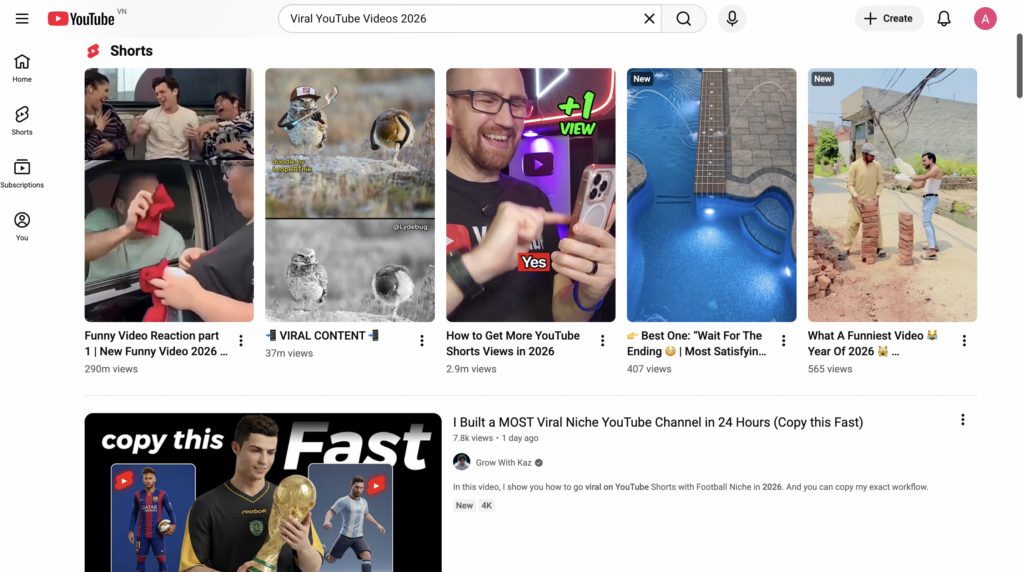
A viral YouTube video is a piece of content that experiences an unusually rapid increase in views, engagement, and shares within a relatively short period.
Many creators believe a video needs millions of views to be considered viral, but that isn’t always true. For a new channel with only a few hundred subscribers, a video reaching 100,000 views in a matter of days could be considered a viral success.
The defining characteristic of viral YouTube videos is not necessarily the total number of views but the speed at which they gain attention. Viral content spreads quickly because viewers actively share it, discuss it, and engage with it.
In many cases, viewers become promoters of the content, helping it reach audiences far beyond the creator’s existing subscriber base.
Why Viral Videos Spread So Quickly
Unlike traditional content that depends primarily on search traffic, viral videos benefit from multiple sources of exposure at the same time.
When viewers enjoy a video, they often:
- Share it with friends and family
- Post it on social media platforms
- Discuss it in online communities
- Comment on it
- Rewatch it multiple times
These actions create momentum. As engagement grows, YouTube receives positive signals indicating that viewers find the content interesting and valuable.
As a result, the platform may begin recommending the video to larger audiences through:
- The Home page
- Suggested Videos
- Browse features
- YouTube Shorts recommendations
- Search results
This creates a cycle where increased visibility leads to more engagement, which in turn generates even greater visibility.
Common Characteristics of Viral YouTube Videos
Although viral YouTube videos come in many forms, they often share several common traits.
They Capture Attention Quickly
Most successful videos make an impact within the first few seconds. Viewers immediately understand why they should continue watching.
They Trigger Emotions
People are more likely to share content that makes them laugh, feel inspired, become curious, or experience surprise.
They Are Easy to Understand
The most shareable videos usually communicate one clear idea. Complicated messages often reduce viewer engagement.
They Deliver Value
Whether the goal is entertainment, education, or inspiration, viral videos typically provide something viewers find worthwhile.
They Encourage Sharing
Viewers naturally want to share content that reflects their interests, opinions, or emotions.
These characteristics help explain why some videos gain extraordinary reach while others remain relatively unnoticed.
Why Some YouTube Videos Go Viral While Others Don’t
Many creators invest significant time in filming, editing, and promoting their content, yet only a small percentage of videos achieve viral success.
The difference often comes down to audience behavior.
Understanding why viewers watch, engage with, and share content is essential if you want to create viral YouTube videos consistently.
Viewer Psychology Matters
At its core, YouTube is a platform driven by human behavior.
People do not watch videos because creators think they are interesting. They watch videos because the content solves a problem, satisfies curiosity, entertains them, or provides value.
Before publishing any video, ask yourself:
- Why would someone click on this?
- Why would they continue watching?
- Why would they share it?
If you cannot answer these questions clearly, viewers may struggle to connect with your content.
Successful creators focus on audience needs rather than simply creating content they personally enjoy.
The Power of Emotion
Emotion is one of the strongest drivers of virality.
Think about the last video you shared with someone. Chances are it made you feel something.
Common emotions found in viral YouTube videos include:
- Surprise
- Excitement
- Inspiration
- Curiosity
- Happiness
- Amazement
- Empathy
People are naturally motivated to share experiences that create emotional reactions.
For example, a heartwarming story may encourage viewers to share the content because it resonates with them emotionally. A surprising experiment may spread because viewers are eager to show others the unexpected outcome.
The stronger the emotional impact, the greater the likelihood of engagement.
Timing and Relevance
Sometimes a video’s success depends heavily on timing.
A topic that attracts little attention today could become highly relevant tomorrow due to:
- Current events
- Industry news
- Seasonal trends
- Product launches
- Social media discussions
Creators who understand emerging trends often position themselves to benefit from increased interest.
However, timing alone is rarely enough. The content must still provide value and stand out from competing videos covering similar topics.
The Importance of Shareability
One of the defining characteristics of viral YouTube videos is their ability to encourage sharing.
When viewers find content useful, entertaining, or emotionally engaging, they often want others to experience it as well.
Ask yourself:
“Would someone send this video to a friend?”
If the answer is yes, your content already has a greater chance of spreading organically.
The most shareable videos tend to be:
- Relatable
- Entertaining
- Helpful
- Surprising
- Inspiring
Creating content with sharing in mind can significantly increase its reach and visibility.
How to Create Viral YouTube Videos
Now that you understand what viral YouTube videos are and why some videos spread faster than others, let’s focus on the practical side of the process.
Although there is no guaranteed formula for virality, successful creators tend to follow similar principles. These strategies won’t automatically make every video viral, but they can significantly increase your chances of creating content that attracts attention, generates engagement, and reaches a wider audience.
1. Create a Strong Hook in the First Few Seconds
The first few seconds of a video can determine its success or failure.
When someone clicks on your video, they immediately begin evaluating whether it’s worth their time. If the opening feels slow, confusing, or unrelated to the title and thumbnail, viewers may leave before reaching the main content.
This is why many successful creators focus heavily on their video introductions.
A strong hook can:
- Present an interesting question
- Reveal a surprising fact
- Show an exciting moment
- Highlight a challenge
- Promise a valuable outcome
For example, instead of starting a video with a lengthy introduction about yourself, you could immediately show the result viewers want to see.
The goal is simple: give viewers a reason to stay.
Remember that every second counts. The faster you capture attention, the more likely viewers are to continue watching.
2. Focus on One Clear Message
Many creators try to cover too much information in a single video.
As a result, the content becomes difficult to follow, and viewers struggle to understand the main takeaway.
Most viral YouTube videos are surprisingly simple.
They focus on:
- One story
- One challenge
- One experiment
- One lesson
- One idea
Before creating a video, ask yourself:
“If viewers remember only one thing from this video, what should it be?”
Your answer should guide every decision during production.
A clear message helps viewers understand your content quickly and makes it easier for them to share it with others.
Complexity often creates confusion, while clarity creates engagement.
3. Trigger Emotional Responses
Emotion plays a major role in why people share content.
Viewers rarely send videos to friends because the content is merely informative. They share videos because those videos create an emotional reaction.
Some of the most common emotions found in viral YouTube videos include:
- Curiosity
- Excitement
- Inspiration
- Surprise
- Humor
- Empathy
Think about the videos you’ve personally shared. Chances are they made you laugh, taught you something unexpected, or inspired you in some way.
When planning your content, consider how you can create emotional moments throughout the video.
For example:
- A transformation story can inspire viewers.
- A challenge video can build excitement.
- A social experiment can create surprise.
- A personal journey can generate empathy.
The stronger the emotional connection, the greater the likelihood that viewers will engage and share the content.
4. Follow Trends Without Copying Everyone Else
Trending topics can provide valuable opportunities for growth.
When a subject is already attracting attention, viewers are actively searching for related content.
However, simply copying what other creators are doing rarely produces long-term success.
Instead of asking:
“How can I copy this trend?”
Ask:
“How can I add something new to this trend?”
You might:
- Offer a unique perspective
- Test the trend differently
- Share personal experiences
- Provide deeper analysis
- Combine multiple ideas
Audiences appreciate originality.
The creators who benefit most from trends are usually those who build upon existing conversations rather than repeating them.
Being different often matters more than being first.
5. Design Click-Worthy Thumbnails
Your thumbnail is often the first thing potential viewers notice.
Before someone watches your content, they usually evaluate two elements:
- The thumbnail
- The title
A great video with a weak thumbnail may never get the opportunity to perform well because viewers never click on it.
Effective thumbnails often include:
- Clear focal points
- High contrast
- Strong facial expressions
- Minimal distractions
- Easy-to-read text
The best thumbnails create curiosity while remaining honest about the content.
Avoid misleading viewers with exaggerated images or false promises.
While clickbait may generate short-term clicks, it often hurts viewer trust and reduces long-term growth.
Instead, focus on accurately representing the most interesting aspect of your video.
6. Write Compelling Video Titles
Your title should work together with your thumbnail to attract attention.
A strong title does more than describe a video—it gives viewers a reason to click.
Compare these examples:
❌ My Fitness Journey
✅ I Lost 30 Pounds in 90 Days: Here’s What Happened
The second title is more specific, outcome-focused, and intriguing.
Effective titles often include:
- Numbers
- Results
- Curiosity
- Benefits
- Questions
The goal is not to trick viewers into clicking.
Instead, your title should clearly communicate why the content is worth watching.
The stronger your value proposition, the higher your potential click-through rate.
7. Encourage Comments and Shares
Engagement plays an important role in content performance.
When viewers interact with your video, they send signals that the content is generating interest.
You can encourage engagement by:
- Asking questions
- Requesting opinions
- Starting discussions
- Inviting viewers to share experiences
For example:
“Which strategy has worked best for your channel? Let me know in the comments.”
Simple prompts like this encourage participation and create conversations around your content.
Additionally, videos that people share often reach audiences beyond your subscriber base.
A single share can introduce your content to hundreds or even thousands of potential viewers.
8. Optimize Audience Retention
Many creators focus heavily on getting clicks.
However, attracting viewers is only half the battle.
The real challenge is keeping them watching.
Audience retention measures how long viewers stay engaged with your content.
To improve retention:
- Remove unnecessary sections
- Keep the pacing consistent
- Add visual variety
- Build anticipation
- Deliver value throughout the video
One useful technique is creating curiosity gaps.
For example:
“Later in this video, I’ll show you the strategy that doubled my views in just two weeks.”
This encourages viewers to continue watching until they reach that section.
The longer viewers stay engaged, the stronger your video’s performance is likely to be.
9. Promote Videos Beyond YouTube
Many creators rely entirely on YouTube to distribute their content.
While recommendations can drive significant traffic, external promotion can provide valuable momentum.
Consider sharing your videos through:
- Facebook groups
- LinkedIn posts
- Email newsletters
- Blog articles
- Online communities
- Industry forums
The goal is not simply to generate views.
Instead, you want to attract viewers who are genuinely interested in your content.
Targeted traffic often performs better than random traffic because engaged viewers are more likely to watch, comment, and share.
Building multiple traffic sources also reduces dependence on a single platform.
10. Analyze Your Top-Performing Content
One of the smartest ways to create more viral YouTube videos is to learn from your own successes.
Your analytics provide valuable insights into audience behavior.
Review your highest-performing videos and identify patterns such as:
- Popular topics
- Strong thumbnails
- Effective titles
- High-retention sections
- Common viewer interests
You may discover that certain formats consistently outperform others.
For example, your audience may prefer:
- Tutorials
- Challenges
- Product reviews
- Case studies
- Personal stories
Rather than constantly chasing new ideas, look for opportunities to expand on what already works.
Successful creators treat every upload as a learning opportunity.
Over time, these insights can help you create content that resonates more deeply with your audience and increases your chances of achieving viral success.
Common Mistakes That Prevent Viral Success
Many creators focus heavily on the things they should do to create viral YouTube videos, but avoiding common mistakes is equally important.
Even a great idea can struggle to gain traction if viewers lose interest quickly or fail to see value in the content. Understanding these mistakes can help you improve your videos and increase your chances of reaching a larger audience.
Weak Video Openings
One of the biggest reasons videos fail is a weak introduction.
Many creators spend too much time introducing themselves, explaining the background of the video, or discussing information that isn’t immediately relevant.
Remember that viewers clicked because they were interested in the promise made by your title and thumbnail. If you don’t deliver on that promise quickly, they may leave.
Instead of saving the most interesting part for later, consider giving viewers a reason to stay right from the beginning.
The faster you capture attention, the better your chances of maintaining audience retention.
Misleading Clickbait
Clickbait can generate clicks, but it rarely creates long-term success.
If your title and thumbnail promise one thing while the video delivers something completely different, viewers will quickly lose trust.
For example, a title that promises a “secret strategy” but provides only basic advice may attract initial clicks, but viewers are unlikely to watch until the end or subscribe for future content.
Successful creators understand that curiosity should be paired with value.
A great title encourages clicks, while a great video justifies those clicks.
Poor Audience Targeting
Trying to create content for everyone often results in content that connects with no one.
Many viral YouTube videos succeed because they appeal strongly to a specific audience.
Before creating content, identify:
- Who your target audience is
- What problems they face
- What interests them
- What type of content they enjoy
The more clearly you understand your audience, the easier it becomes to create videos that resonate with them.
Ignoring Analytics
Analytics provide valuable information about how viewers interact with your content.
Unfortunately, many creators ignore this data and continue making videos without learning from previous results.
Pay attention to metrics such as:
- Click-through rate (CTR)
- Audience retention
- Average view duration
- Traffic sources
- Engagement levels
These insights can reveal what’s working and what needs improvement.
Successful creators often spend as much time analyzing their content as they do creating it.
Chasing Virality Instead of Value
This is perhaps the most common mistake of all.
Many creators become obsessed with creating a viral video and forget about the audience they’re trying to serve.
Ironically, the videos that go viral are often the ones focused on delivering genuine value rather than chasing views.
Whether your goal is to educate, entertain, inspire, or solve problems, putting the audience first will almost always produce better results than focusing solely on virality.
In the long run, value creates trust, and trust creates loyal viewers.
Frequently Asked Questions About Viral YouTube Videos
How do YouTube videos go viral?
Videos typically go viral when they attract strong engagement and encourage viewers to share them. Factors such as audience retention, emotional appeal, shareability, and viewer satisfaction often contribute to rapid growth.
What makes a YouTube video viral?
There is no single factor that guarantees virality. However, viral YouTube videos often combine compelling storytelling, strong emotional triggers, engaging visuals, and content that viewers find valuable enough to share with others.
How many views are considered viral on YouTube?
There is no official threshold.
For a small channel, 50,000 or 100,000 views may feel viral. For larger creators, virality might mean reaching millions of views within a few days.
The speed of growth is often more important than the total view count.
How long does it take for a video to go viral?
Some videos gain traction within hours of being published, while others may take weeks or even months before they experience significant growth.
Many creators are surprised to discover that older videos can suddenly become popular when interest in a topic increases.
Can old YouTube videos suddenly go viral?
Absolutely.
Evergreen content often has the potential to attract viewers long after publication.
A tutorial, review, or educational video may remain relevant for years and can experience renewed growth when people begin searching for that topic again.
This is one reason why creating timeless content can be a smart long-term strategy.
Does YouTube promote viral videos?
YouTube does not intentionally make videos viral.
Instead, the platform recommends content that viewers appear to enjoy.
When a video generates strong engagement, high watch time, and positive viewer signals, YouTube may show it to more people. This increased exposure can create the conditions for virality.
Conclusion
Creating viral YouTube videos isn’t about luck—it’s about understanding what captures attention, keeps viewers engaged, and encourages sharing. By focusing on strong hooks, audience retention, emotional appeal, and valuable content, you can improve your chances of reaching a wider audience.
While not every video will go viral, consistently applying these strategies can help you build momentum and grow your channel over time.
Creating viral YouTube videos is only one part of the journey. To build long-term success, explore our guides on How to Grow on YouTube, Get More Viewers on YouTube, and What Is the YouTube Algorithm to learn how successful creators turn short-term attention into sustainable channel growth.