How to Go Viral on Twitter (X): 10 Proven Strategies That Work
- POPULAR Tips WEEKLY TOP
Anna Anna
- 0
- 73 minutes read
Introduction
Going viral on Twitter (X) is something almost every creator, marketer, and business wants to achieve.
A single viral tweet can generate thousands of new followers, increase brand awareness, drive website traffic, and create opportunities that would normally take months or even years to achieve.
However, many people mistakenly believe that going viral is purely a matter of luck.
The truth is that while luck can certainly play a role, viral tweets often share common characteristics. Successful creators understand how the X algorithm works, know what their audience wants, and consistently publish content that encourages engagement and sharing.
The good news is that you don’t need millions of followers to go viral.
Small accounts regularly achieve massive reach because the X algorithm prioritizes relevance and engagement rather than follower count alone.
In this guide, you’ll learn proven strategies to increase your chances of going viral on Twitter, understand why some tweets explode in popularity, and discover the tools that can help accelerate your growth.
Table of Contents
What Does It Mean to Go Viral on Twitter?
The definition of a viral tweet varies depending on account size.
For a creator with only a few hundred followers, receiving tens of thousands of impressions could be considered viral.
For larger accounts, viral content may generate hundreds of thousands or even millions of impressions.
In general, a tweet is considered viral when it reaches significantly more people than your usual audience.
How Many Views Are Considered Viral?
There is no universal number.
However, many creators consider a tweet viral when it receives:
- 10x more impressions than average.
- A substantial increase in followers.
- Exceptional engagement rates.
- Significant repost activity.
For example, if your typical tweet receives 2,000 impressions and suddenly reaches 100,000 impressions, that tweet has likely gone viral.
The most important metric is not the total number of impressions but the relative increase compared to your normal performance.
Why Going Viral Matters
A viral tweet can create numerous long-term benefits.
These include:
- Increased follower growth.
- Higher brand awareness.
- More website traffic.
- New business opportunities.
- Improved authority within your niche.
- Greater reach for future content.
Many creators experience sustained audience growth long after a viral post stops gaining impressions.
This is why understanding how virality works can significantly improve your long-term Twitter strategy.
Can Small Accounts Go Viral?
Absolutely.
One of the most exciting aspects of Twitter is that small accounts can still achieve enormous reach.
Unlike some social platforms, the X algorithm does not exclusively favor large creators.
Instead, it prioritizes content that generates strong engagement signals.
This means that a valuable tweet from a small account can outperform content published by accounts with hundreds of thousands of followers.
If you have already read our guide on How the X Algorithm Works, you know that the platform constantly evaluates content quality, engagement, and relevance.
Follower count is only one factor among many.
How the X Algorithm Influences Virality
Understanding the algorithm is essential if your goal is to create viral content.
The algorithm decides which tweets appear in users’ feeds and determines whether a post deserves wider distribution.
Rather than immediately showing your tweet to millions of users, X typically begins by testing it with a smaller audience.
The platform then analyzes how people respond.
Positive engagement signals encourage the algorithm to continue expanding reach.
Why Early Engagement Matters
The first few minutes and hours after publishing are often critical.
During this period, the algorithm evaluates whether users find your content interesting.
It looks at signals such as:
- Likes
- Replies
- Reposts
- Bookmarks
- Profile visits
Strong early engagement sends a clear message that users enjoy the content.
As a result, the algorithm may expose the tweet to increasingly larger audiences.
This is one reason why posting at the right time is so important.
Publishing when your audience is most active increases the likelihood of generating these valuable early interactions.
For a deeper discussion of optimal posting schedules, see our guide on Best Time to Post on Twitter.
The Importance of Replies and Reposts
While likes are useful, replies and reposts are often much stronger indicators of content quality.
Replies demonstrate that users are actively participating in the conversation.
Reposts indicate that people believe the content is valuable enough to share with their own audience.
Both signals significantly increase the probability of a tweet spreading beyond your existing followers.
Creators who consistently encourage meaningful conversations often experience stronger long-term growth.
How the For You Feed Expands Reach
The For You feed has dramatically changed how content spreads on Twitter.
Users now regularly discover tweets from accounts they do not follow.
If your content generates strong engagement and aligns with user interests, it may appear in the For You feed of thousands of additional users.
This recommendation system allows virtually any creator to achieve viral reach regardless of audience size.
For this reason, understanding audience interests and creating highly relevant content should always be a priority.
10 Proven Ways to Go Viral on Twitter
1. Write Strong Hooks
The first line of a tweet determines whether users continue reading or keep scrolling.
A weak opening often leads to poor engagement.
Strong hooks create curiosity and immediately communicate value.
Examples include:
- Surprising statistics.
- Contrarian opinions.
- Bold statements.
- Personal experiences.
- Unexpected results.
Good hooks encourage users to stop scrolling and engage with the content.
Because attention on social media is extremely limited, mastering hooks is one of the most valuable skills creators can develop.
2. Post Content People Want to Share
Virality depends heavily on sharing.
People share content for many reasons.
They may want to:
- Educate others.
- Entertain friends.
- Express personal identity.
- Support a belief.
- Start conversations.
Educational content, useful frameworks, industry insights, and relatable experiences often generate significant repost activity.
Before publishing, ask yourself:
“Would someone feel compelled to share this with their audience?”
If the answer is no, consider improving the content.
3. Focus on Conversations, Not Broadcasting
Many users treat Twitter as a broadcasting platform.
They publish content but rarely interact with others.
This approach limits growth.
Twitter is fundamentally a conversation platform.
Successful creators actively engage with their audience by:
- Replying to comments.
- Participating in discussions.
- Asking questions.
- Sharing opinions.
Meaningful conversations generate stronger engagement signals and improve algorithmic performance.
The more relationships you build, the greater your future reach is likely to become.
4. Publish at the Right Time
Timing alone will not make a tweet go viral, but it can significantly increase your chances of success.
As mentioned earlier, the X algorithm pays close attention to early engagement signals. If you publish when your audience is offline, even excellent content may struggle to gain momentum.
On the other hand, publishing when your followers are active gives your content a better opportunity to receive likes, replies, reposts, and bookmarks during the critical early hours.
Several factors influence the best posting time, including:
- Audience location
- Time zones
- Industry
- Audience behavior patterns
For example, a creator targeting professionals may see stronger engagement during commuting hours or lunch breaks, while entertainment accounts may perform better in the evenings.
There is no universal posting schedule that works for everyone.
Creators should regularly analyze performance data and adjust accordingly.
For a detailed breakdown, check out our guide on Best Time to Post on Twitter.
5. Use Trending Topics Strategically
Trending topics can dramatically increase visibility when used correctly.
However, many users make the mistake of chasing every trend regardless of relevance.
This strategy rarely works.
The most successful creators participate only in trends that naturally align with their niche and audience interests.
For example:
- Marketing creators may comment on major industry updates.
- Technology creators may discuss new product launches.
- Finance creators may analyze breaking economic news.
By contributing unique insights to trending discussions, creators can expose their content to much larger audiences.
The key is to add value rather than simply repeating what everyone else is saying.
6. Create Highly Valuable Threads
Threads consistently perform well on X because they increase dwell time and encourage deeper engagement.
Long-form threads allow creators to:
- Tell stories.
- Teach step-by-step processes.
- Share case studies.
- Present detailed insights.
The longer users spend reading your content, the stronger the engagement signals become.
Successful thread topics often include:
- Personal growth lessons.
- Business strategies.
- Marketing frameworks.
- Productivity tips.
- Case studies.
- Detailed tutorials.
High-quality threads are frequently bookmarked and reposted, making them excellent candidates for viral growth.
7. Evoke Emotions
Emotion is one of the strongest drivers of virality.
People share content because it makes them feel something.
Common emotions behind viral content include:
- Surprise
- Inspiration
- Curiosity
- Excitement
- Humor
- Empathy
Tweets that create emotional reactions often generate significantly higher engagement than purely informational posts.
Storytelling is particularly effective because stories naturally create emotional connections.
Sharing personal experiences, lessons learned, failures, and successes can make your content far more relatable.
8. Encourage Meaningful Engagement
Not all engagement is equal.
The X algorithm increasingly prioritizes meaningful interactions rather than superficial engagement.
Instead of asking users to simply like a tweet, encourage genuine discussion.
Examples include:
- Asking thoughtful questions.
- Requesting opinions.
- Sharing controversial perspectives.
- Inviting experiences from readers.
The goal is to start conversations.
Replies and discussions often send stronger quality signals than likes alone.
For creators looking to improve engagement systematically, our guide on How to Increase Engagement on Twitter provides additional strategies.
9. Stay Consistent
Many creators give up before seeing meaningful results.
Virality often appears unpredictable, but successful creators typically publish consistently for months or years.
Consistency matters because:
- It builds audience trust.
- It strengthens account activity signals.
- It creates more opportunities for viral success.
- It allows creators to refine their skills.
Every new tweet represents another opportunity for growth.
The more high-quality content you publish, the greater your chances of producing a breakout post.
10. Analyze Viral Tweets and Repeat What Works
One of the fastest ways to improve is to study successful content.
Whenever a tweet performs exceptionally well, analyze it carefully.
Questions to ask include:
- Why did people engage?
- What type of hook was used?
- What emotion did it evoke?
- Why was it shared?
- What audience problem did it solve?
Patterns often emerge.
You may discover that certain formats, topics, or writing styles consistently outperform others.
Data-driven creators usually grow faster because they continuously refine their strategy based on real performance.
Common Reasons Why Tweets Fail to Go Viral
Even strong creators occasionally publish tweets that receive little engagement.
Understanding common mistakes can help you avoid unnecessary setbacks.
1. Weak Hooks
If users are not interested in the opening line, they will continue scrolling.
Without attention, engagement cannot occur.
Strong hooks remain one of the most important factors behind viral content.
2. No Clear Value
People engage with content that helps, entertains, inspires, or informs them.
Tweets that lack a clear purpose often struggle to gain traction.
Always ask:
“What value does this provide to readers?”
3. Posting at the Wrong Time
Publishing when your audience is inactive reduces early engagement opportunities.
Poor timing can significantly limit reach.
Again, understanding your audience’s activity patterns is essential.
4. Ignoring Audience Engagement
Creators who never reply to comments often miss valuable opportunities to strengthen relationships.
Conversations fuel growth on Twitter.
Ignoring your audience can limit future engagement.
5. Inconsistent Posting
Long periods of inactivity frequently reduce momentum.
Consistency helps maintain audience interest and improves overall account performance.
6. Focusing Only on Self-Promotion
Constant promotional content rarely performs well.
Twitter users generally prefer valuable insights, conversations, and authentic experiences over sales-focused messaging.
A value-first approach usually produces better long-term results.
Best Tools to Help You Go Viral on Twitter
The right tools cannot guarantee virality, but they can improve efficiency, provide valuable insights, and help optimize your content strategy.
1. Typefully
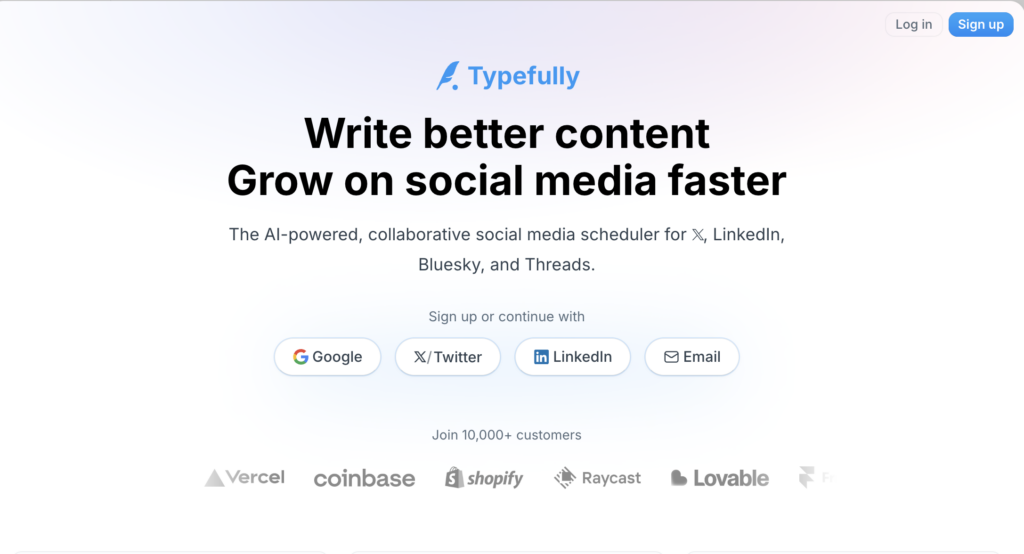
Typefully is one of the most popular writing tools for Twitter creators.
It allows users to draft, schedule, preview, and optimize tweets before publishing.
Pros
- Clean writing interface.
- Excellent thread creation experience.
- Built-in analytics.
- Easy scheduling.
Cons
- Advanced features require a paid plan.
- Primarily focused on Twitter.
Best For
Creators who frequently publish threads and want a distraction-free writing environment.
2. Hypefury

Hypefury is designed to automate content distribution and maximize engagement.
Many creators use it to recycle evergreen tweets and automate promotional workflows.
Pros
- Powerful automation features.
- Tweet recycling.
- Auto-plug functionality.
- Scheduling capabilities.
Cons
- Can feel overwhelming for beginners.
- Premium pricing may be expensive for new creators.
Best For
Creators and businesses that publish content consistently and want to automate growth processes.
3. Tweet Hunter
Tweet Hunter combines content inspiration, AI assistance, scheduling, and analytics in one platform.

It has become extremely popular among growth-focused creators.
Pros
- Large database of viral tweets.
- AI-assisted writing features.
- Scheduling and analytics.
- Content inspiration tools.
Cons
- Relatively expensive.
- Some features may be unnecessary for casual users.
Best For
Creators focused on audience growth and data-driven content strategies.
4. Buffer
Buffer is a social media management platform that supports multiple channels.
It helps creators schedule and organize content across various platforms.
Pros
- Supports multiple social platforms.
- User-friendly interface.
- Affordable pricing.
- Reliable scheduling.
Cons
- Limited Twitter-specific growth features.
- Fewer advanced analytics compared to dedicated Twitter tools.
Best For
Businesses and creators managing multiple social media accounts.
5. ChatGPT
ChatGPT can support nearly every stage of the content creation process.
Many creators use it to brainstorm ideas, improve hooks, and generate thread outlines.
Pros
- Excellent idea generation.
- Fast content brainstorming.
- Helps overcome writer’s block.
- Supports content research.
Cons
- Requires human editing.
- Generic prompts may produce generic content.
Best For
Creators looking to accelerate ideation and improve content production efficiency.
How to Increase Your Chances of Going Viral
Although there is no guaranteed formula for virality, certain habits can dramatically improve your odds over time.
Successful Twitter creators rarely rely on luck alone. Instead, they continuously test, analyze, and refine their content strategy.
Study Top Creators in Your Niche
One of the fastest ways to improve is to observe creators who consistently achieve strong results.
Pay attention to:
- Writing style
- Hooks
- Content formats
- Posting frequency
- Engagement strategies
The goal is not to copy others but to identify patterns that resonate with audiences.
Ask yourself:
- What topics generate the most engagement?
- Which tweets receive the highest number of reposts?
- How do successful creators structure their threads?
Studying proven examples can significantly shorten your learning curve.
Experiment With Different Formats
Not every audience responds to the same type of content.
Experimentation helps you discover what works best for your niche.
Consider testing:
- Short-form tweets
- Long-form threads
- Story-based content
- Educational content
- Opinion posts
- Case studies
- Visual content
Some creators achieve the best results with concise one-liners, while others thrive with detailed educational threads.
The only way to know is through consistent testing.
Track Analytics Regularly
Data should guide your content decisions.
Review your analytics frequently to understand:
- Which tweets receive the most impressions
- Which posts generate the highest engagement rates
- What topics attract new followers
- Which formats encourage reposts
Metrics worth monitoring include:
- Impressions
- Engagement rate
- Replies
- Reposts
- Bookmarks
- Profile visits
- Follower growth
Over time, analytics reveal patterns that can help you create more effective content.
Build Relationships With Other Users
Twitter is fundamentally a social platform.
Creators who actively participate in conversations often experience faster growth than those who only broadcast content.
Relationship-building activities include:
- Replying to comments
- Engaging with industry leaders
- Joining discussions
- Supporting other creators
- Sharing thoughtful insights
Strong relationships increase visibility because the algorithm frequently prioritizes content from accounts users interact with regularly.
Building a loyal community may not produce instant virality, but it creates sustainable long-term growth.
Frequently Asked Questions
Can anyone go viral on Twitter?
Yes.
Any account can potentially go viral if the content resonates strongly with users and generates significant engagement.
Small accounts regularly achieve massive reach because the X algorithm prioritizes relevance and engagement over follower count.
How many impressions make a tweet viral?
There is no fixed number.
Many creators consider a tweet viral when it receives significantly more impressions than usual.
For example, if your average tweet receives 5,000 impressions and a new tweet reaches 100,000 impressions, that tweet could reasonably be considered viral.
How long does it take for a tweet to go viral?
Some tweets go viral within minutes, while others gain momentum over several days.
In certain cases, older tweets can suddenly resurface and receive significant engagement weeks or months after publication.
Do hashtags help tweets go viral?
Relevant hashtags can improve discoverability and help new audiences find your content.
However, hashtags alone rarely make content go viral.
High-quality content and strong engagement remain the most important factors.
If you want to learn more, read our guide on How to Find Trending Hashtags on Twitter.
Can small accounts go viral on X?
Absolutely.
Many creators with only a few hundred followers have produced tweets that reached hundreds of thousands or even millions of users.
Strong content quality and engagement often matter more than audience size.
Are threads more likely to go viral?
Threads frequently perform well because they increase dwell time and encourage deeper engagement.
Educational threads, case studies, and storytelling threads are particularly popular among Twitter users.
However, short tweets can also go viral if they deliver strong value or evoke emotions.
Conclusion
Going viral on Twitter is not simply a matter of luck.
While no strategy guarantees virality, creators who consistently publish valuable content, encourage meaningful conversations, and understand how the X algorithm works dramatically improve their chances of success.
The most successful Twitter creators focus on providing value first.
They experiment with different content formats, analyze performance data, and continuously refine their approach based on audience feedback.
Remember that virality should not be the only goal.
Building genuine relationships, creating useful content, and developing a loyal audience often lead to more sustainable long-term growth than chasing short-term viral moments.
By applying the strategies outlined in this guide, you can significantly increase your reach and create more opportunities for your content to spread across the platform.
Want to grow faster on Twitter? Explore our other in-depth guides on Twitter growth, engagement, hashtags, and algorithm strategies on our website.